Labels

Flipkart.com

Thursday, December 20, 2012

Top 10 advertisers on Indian TV 2012


1. Hindustan Unilever Ltd
India’s largest consumer goods company, HUL tops the list with an 8% share in 2011. The company’s products are available in more than 6.4 million outlets across India. The company’s products include foods, beverages, cleaning agents and personal care products. Some of the company’s popular brands include Bru, Brooke Bond, Domex, Surf Excel, Vim, Axe, Close up, Sunsilk, Lakme and Lux among others. 

2. Reckitt Benckiser India Ltd
The company is known for household cleaning products, consumer healthcare and personal products has a 3% share in 2011. The company organises its products into six categories: surface care, fabric care, dishwashing, home care, health and personal care, and food. Some of the Reckitt Benckiser's brands include Dettol, Strepsils, Veet, Air Wick, Clearasil, Durex, Mortein and vanish.


3. ITC Ltd

The Indian conglomerate company is headquartered in Kolkata and has a 2% share in 2011. The company’s business includes four segments: FMCG, hotels, paper and packaging, paperboards and agri business. Some of its products include Gold Flake Kings, Classic, Aashirvaad, Minto, Sunfeast, Candyman, Bingo, Fiama di Wills and Vivel.


4. Cadbury India Ltd
The popular confectionery company has a share of 2% in 2011. Cadbury India operates in four categories: chocolate confectionery, milk food drinks, beverage and candy and gum category. Its products include Cadbury Dairy Milk, Bournville, 5-Star, Perk, Gems, Eclairs, Bournvita, Cadbury Celebrations, Cadbury Dairy Milk Shots, Cadbury Dairy Milk Silk, Halls, Tang and Oreo.

5. Coca Cola India Ltd
The company which is often referred to as Coke has a 2% share in 2011. The company’s marketing tactics led Coke to its dominance of the world soft-drink market throughout the 20th century. The company has also introduced Diet Coke under the Coke brand name. By 2020, Coca-Cola with its partners is expected to invest $5 billion for its operations in India.

6. Colgate Palmolive India Ltd
The company focuses on the production, distribution and provision of household, health care and personal products, such as soaps, detergents, and oral hygiene products including toothpaste and toothbrushes. Colgate Palmolive India’s share was 2% in 2011 when compared to 1% in 2010.


7. Procter & Gamble
The products of this multinational consumer goods company include food, beverages, cleaning agents and personal care products. P&G’s percentage share has dropped in terms of advertising to 1% in 2011 when compared to 2% in 2010. Ariel, Gillette, Duracell, Dolce & Gabbana, Hugo Boss, Oral B, Olay, Pantene, Pampers, Pringles and Wella are some of the P&Gbrands.

8. Ponds India
Pond’s is a company which is very popular for its beauty and health care products. The company has passionately and diligently led the way in understanding a woman's skin care and beauty essentials. The company concentrates on anti ageing, skin lightening, oil control, moisturizing and other skincare segments. Pond’s Age Miracle and Pond’s Gold Radiance are among the popular products. It has a percentage share of 1% when it comes to advertising on the television.

9. Smithkline Beecham

After the merger with Glaxo Wellcome, Smithkline Beecham is now known as GlaxoSmithKline and has a percentage share of 1% in advertising. This consumer healthcare company has its R&D centres in India. Sensodyne, Nicorette, Aquafresh and Biotene are some of its well known products. It also has a large consumer healthcare division which produces and markets nutritional products including Boost and Horlicks.

10. Bharti Airtel Ltd
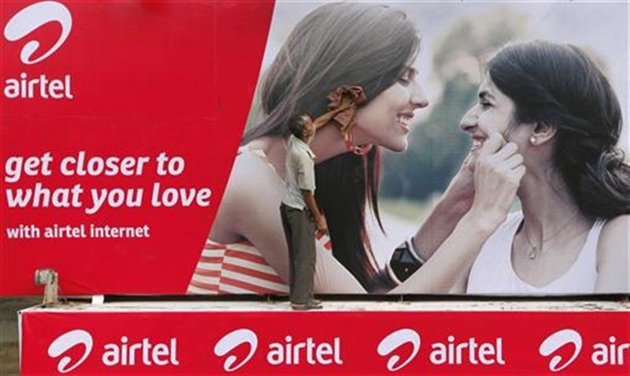
Commonly known as Airtel, the company’s advertising percentage share is 1% according to the report. Airtel is considered to be the largest provider of mobile telephone and second largest provider of fixed telephone in India. It also provides broadband and subscription television services.


Source – Yahoo Finance
Research Report - FICCI-KPMG Indian Media and Entertainment Industry Report 2012

(Note: Data represents shares for January to September 2011)


Thursday, December 13, 2012

20 Ways to Generate Passive Income....$$$


If you're interested in making money but don't want to take a second job, you should consider making passive income. It's basically money you earn consistently without doing much or even anything at all. Of course, you do have to put in a lot of work in the beginning, but once you set up the passive income revenue stream, you can just sit back and enjoy the fruits of your labor without lifting a finger. Here are some ideas:
·         Write a book. Writing a book means you can earn money off of the sales once you've published it. You can always go the ebook option and self publish, or try to find a publishing house that will take you on.
·         Create an app. Create a smartphone app and earn money every time someone downloads it. You never know what will go viral and how quickly you can make money if your app's a hit. In fact, the silly iFart app even generated $30,000 in just one day.
·         Start a static blog. Spend some time building a website in an area that interests you and other people. Focus on topics that won't ever get dated ("how to" articles are pretty evergreen) that you know people will be searching for. Host ads on your site. Once you have some good content on your site, you can quit writing and make money off your old content.
·         Write articles online. You can make money if you get approved to be a writer for About.com. You'll get paid to write the articles in the first two years. After that, you'll be paid according to page views. Once you've put in the initial effort to write the article, you can just make money off of the views in years to come.
·         Create a YouTube video. Shoot a video for YouTube, and if your video becomes popular, you can run ads on it to make money. The amount you earn varies, but many people, such as Justin Bieber, have launched careers out of it, and popular YouTubers are making over six figures.
Read on for more.
·         Take beautiful photos. If you've got an eye and passion for photography, sell your photos to sites like Shutterstock — a place where amateur photographers can sell their photos. You'll earn a commission that ranges anywhere from 25 cents to $75 or more for every image downloaded. There are other similar sites like iStockphoto and Shutterfly, so be sure to do your research and pick one that works best for you.
·         Draw and design graphics. The photo websites also accept illustrations and graphics. You will still earn money for each download.
·         Make a t-shirt. Design a t-shirt for Threadless, and if your design is popular among the site's community, the company will use your designs for the next Threadless shirts. If your design is picked, you'll get $2,000, a $500 threadless voucher (which you can redeem for $200 cash), and another $500 every time your t-shirt is reprinted. You can also design and sell t-shirts as well as other products on sites like Zazzle and Cafe Press.
·         Sell insurance. If you sell insurance, you will not only make money when you've closed a deal, but some companies will also give you an additional commission when your customer renews his insurance.
·         Stock dividends. One of the more common ways to earn passive income is investing in stocks that pay high dividends. Here's a list of some dividend-paying stocks with high rates.

Source - ThinkStock

Tuesday, December 11, 2012

What is a Ponzi Scheme ???

Picture - Charles Ponzi —  (SourceBoston Public Library, Print Department)

In a Ponzi scheme, potential investors are wooed with promises of unusually large returns, usually attributed to the investment manager’s savvy, skill or some other secret sauce. The returns are repaid, at least for a time, out of new investors’ principal, not from profits. 

This can continue as long as new investors line up with cash, and old investors don’t try to withdraw too much of their money at once.

Ponzi schemes are also known as pyramid schemes, from the shape of any chart that reflects their basic premise — that ever-growing layers of new recruits are needed to provide gains to the smaller, earlier cohorts. A gigantic pyramid scheme virtually bankrupted Albania after the fall of Communism.

Ponzi schemes are named after Charles Ponzi (pictured above), the flamboyant con man whose scam followed a particularly spectacular course. Mr. Ponzi began telling New York investors in December 1919 that investments in foreign postage coupons could yield 50 percent returns in 45 days. By redeeming coupons bought cheaply overseas for much higher amounts in the United States, he could double their money in three months, he claimed.

Mr. Ponzi was a fast-talking immigrant and college dropout, and his scheme — according to Mitchell Zuckoff, Mr. Ponzi’s biographer — rested on the eagerness of ordinary working people to benefit from the wealth they saw being generated around them as the economy recovered from World War I.

Mr. Ponzi was convicted of mail fraud in 1920 and served time in federal and state prisons before he was deported to Italy in 1934, never having become a citizen. He died penniless in Rio de Janeiro in 1949 and was buried in a pauper’s cemetery there.

The $65 billion fraud that Bernard L. Madoff perpetrated has been called the largest Ponzi scheme in history. Though the magnitude, scale and details are different, Mr. Ponzi’s scheme and Mr. Madoff’s fraud each reflect their respective, super-heated financial eras.


Source - nytimes.com

Friday, November 16, 2012

The Secret of Attracting Money.....!!!


What is the nature of money???

Why is it that only a handful of them have it all???

Why the majority struggle all their life and end up with just meeting ends even though having all the talent, knowledge and skills????

To get the answer these questions read the full article. And I am sure after reading this article you will gain something out of it.

Often the topic of money is not appreciated by the so called society. If some body talks about money all the time, people think that he is a 
greedy person.

My question to you is if u love a girl and think of her all the time, does that mean that you are a nympho maniac or does that mean you are just thinking about lust ???

The same way there is always a difference between love for money and greed for money.

There is no harm or sin in thinking about money, for it is just an idea. when you ll start having money in your thoughts and ideas , it will flow into your real life and make you prosperous and truely speaking it is a great pleasure and joy to think that you have lots of money and you are prosperous. :)

The more you become attached and obsessed with money the hard it becomes to manifest it, money flows into your life once you become detached to it.
 

The saying "it takes money to make money" is true, but not how you think. 
Money is attracted to money, but it doesn’t always have to be physical money that attracts money into your life.

Money is energy.

Everyone ought to be rich, there are many ways to be spiritual, and one of them includes money.

Money has been abused and misunderstood.

Money is not the root of evil.

So you may be asking yourself now, “Why don’t I have those things then?”

The fact is that, most likely, you don’t have those things because you haven’t let yourself be open to receiving them.

You have to begin to think and feel different in order to get something different.

It all starts with a vision of you being in a different life.

Now, it may be hard to imagine yourself with lots of cash if you’ve always had a problem with money.

But what if you begin to imagine what it would feel like if your neighbor had lots of cash? Or what would it feel like if your co-worker had more than enough money?

Sometimes it’s easier to imagine those kinds of things for others than it is for yourself, but what you end up doing for yourself is focusing on abundance.

And that’s the key secret…
By consistently focusing on abundance, you are consciously sending a command to your subconscious to start attracting abundance.


To Know more how on how create abundance and manifest your desires click on the below link.

http://hop.clickbank.net/?dedhia86/tsdc1129&x=moneymagnet

Saturday, May 12, 2012

What is Claim Repudiation Ratio?


Insurers always play the game on Claim Settlement Ratio specially the King in the market boasts of having the undisputable claim settlement ratio.

Consumers are being convinced on this ratio by showing colorful numbers but the fact is one should buy an Insurance Policy based on the CLAIM REPUDIATION RATIO and not on CLAIM SETTLEMENT RATIO. Logic is as below.
Claim settlement ratio = No of Policy settled / No of Policies issued by the company 

AND

Claim Repudiation Ratio = No of Claims Rejected / No of Claims made

So as the insurance company grows automatically its Claim settlement ratio also improves.
But the fact remains that company has to be fair at the time of settleing the claim or it immensely affects its Claim Repudiation Ratio


Note – The information posted is issued in public interest and consumer awareness. Any individual or institution having any issues regarding the same can mail me at chintan.dedhia@live.com


Sunday, May 15, 2011

Fuel price and interest rate hikes a Political Math....


On the one hand RBI is increasing the interest rates to make money costly which will tame demand and hence reduce inflation. And once the inflation tames Govt increases fuel prices.

The result of the two actions is as below

Interest Rate Hike By RBI to tame inflation
Fuel Price Hike by Govt in the name of deregulation
Results in increase in interest rates which leads to increased cost of borrowing, increased Home loan EMIs.
Results in shooting up of transportation costs making travelling by private vehicles dearer and increase in Rickshaw and Taxi fares as many of them still run on Petrol.
Result
1.Reduced inflation, reduced cost of food and other daily necessities.
2. More outflow of salary per month to pay loans.
Reduced food prices, but increased EMI amt.

Result
Costly Private and Public transport again draws a big hole in Common Man’s pocket, who even if does not have a private vehicle, has to suffer from increase in fuel rates due to increase in fares.

If the price of petrol stands at Rs 58.90, the break up of cost as calculated by the Indian Government is as follows - (Current break up is not available)

Basic Price: Rs 28.93
Education Tax: Rs 0.43
Dealer commission: Rs 1.05
Excise duty: Rs 14.35
VAT: Rs 5.5
Petrol Custom: Rs 1.54
Crude Oil Custom duty: Rs 1.1
Transportation Charge: Rs 6.00
Total price: Rs 58.90

Suggestion to government – I think govt should stop looting its citizens in the name of taming inflation. Instead of increasing the fuel and interest rates, govt can save a lot of money just by reducing electricity theft by 50% and reducing corruption by only 10% if possible and it is a simple logic which can be understood by a common man and we do not need any ECONOMIST to understand it!

- By Chintan Dedhia

Disclaimer - It is just a personal thought and the expression of the same by a mere analysis on the economic events It is not intended to hurt any person or institution .Any body having any queries please mail me at chintan.no1@gmail.com


Friday, March 25, 2011

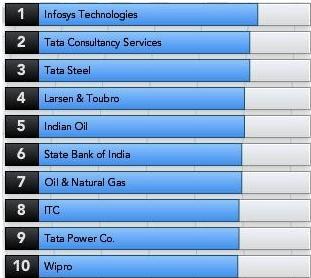
Top 10 Most admired companies in India


Top 10 Most admired companies in India

1.     Infosys Technologies (Annual Sales of over $4 billion)
2.     Tata Consultancy Services  (largest Indian Outsourcer by Sales)
3.     Bharti Airtel 
4.     Larsen & Toubro (in deal to build nuclear reactors)
5.     Wipro (Global workforce of close to 100k)
6.     Tata Steel (Manufacturing units in 27 countries)
7.     Hindustan Lever (has more than 400 brands)
8.     HDFC Bank (Incorporated in 1994)
9.     State Bank of India (planning to add 1000 branches) 
10.  ITC (Wide-range Conglomerate)
Infosys Technologies is adjudged as the most admired company in India followed by TCS and Bharti Airtel in 2 and 3rd position respectively.
The ranking has broadly taken 5 different aspects into consideration.
§  Financial Reputation
§  Corporate Reputation
§  Quality
§  Innovation
§  Vision
Following are the individual ranking of various parameters:
Financial Reputation


With the biggest reserves and deposits than any other bank in India, SBI takes the numero Uno position when it comes to Financial Reputation. Reliance Industries, followed by HDFC bank complete the top 3 positions.
Corporate Reputation

Infosys Technologies known for its exemplary Governance and transparency in corporate dealing comes at top followed by 2 Tata companies, TCS and Tata Steel
Quality

Again with excellent quality of Software deliveries, Infosys takes the top position, followed by L&T and Bharti Airtel.
Innovation

Now this is a big surprise to me, TCS takes in the top position in Innovation. I always related TCS as a Volume player without much innovation, but I seem to be completely wrong here.
Infact, TCS is the most admired company for innovation, followed by Bharti Airtel and Infosys Technologies
Vision


With visionaries like Narayan Murthy and Nandan Nilekani at the helm, Infosys Technologies had to take the top position when it comes to vision. Tata Steel surprisingly  comes at 2nd followed by Reliance Industries.


Tuesday, December 14, 2010

UNCLE SAM HIT THE SUMO !!!!

Due to my academic schedules and my SEM III exams of MBA I could not write the blog. Please find below the continuation of the previous Blog( UNCLE SAM's CHINESE PROBLEM)

During the 1980s due to heavy Japanese exports especially that of automobiles flooded the US markets which led to the outflow of the USDs to Japan leading to surpluses with Japan and deficits with the US, thus US blamed JAPAN’s undervalued Yen for the US deficits.
The long running dispute between the United States and Japan throughout the 1980’s and early 1990’s over the value of the yen ended only when Japan’s economy entered its “lost decades,” which has made the Chinese determined not to repeat the experience.
But, based on Japan’s experience, the Chinese do seem to have good reasons to be wary of US pressure to revalue the renminbi. Indeed, the economists Ronald McKinnon and Kenichi Ohno have singled out US pressure for yen appreciation as a key source of the Japanese economy’s long-term deflation and stagnation – the so-called “lost decade” of economic malaise that is now well into its second.
Chinese officials agonize over the US pressure. If they yield to it, the Chinese economy, they argue, may fall into the same deflationary trap that ensnared Japan after the yen’s appreciation in the 1980’s – under US pressure – inflated a catastrophic asset-price bubble. But if they continue to resist, China may face hot trade disputes with the US, which could be even messier.

Like Japan in the 1980’s, China must defend itself from US claims that the renminbi’s weakness is the source of the imbalances between the two countries. Currency appreciation, Japan argued then and China argues now, is unlikely to result in a significant current-account adjustment, which requires addressing not only China’s high savings rate, but also low savings in the US.

What is the Lost Decade?

The economic miracle ended abruptly at the very start of the 1990s. In the late 1980s, abnormalities within the Japanese economic system had fuelled a massive wave of speculation by Japanese companies, banks and securities companies. Briefly, a combination of incredibly high land values and incredibly low interest rates led to a position in which credit was both easily available and extremely cheap. This led to massive borrowing, the proceeds of which were invested mostly in domestic and foreign stocks and securities.

Recognizing that this bubble was unsustainable (resting, as it did, on unrealizable land values - the loans were ultimately secured on land holdings), the Finance Ministry sharply raised interest rates. This popped the bubble in spectacular fashion, leading to a massive crash in the stock market. It also led to a debt crisis; a large proportion of the huge debts that had been run up turned bad, which in turn led to a crisis in the banking sector, with many banks having to be bailed out by the government.

Eventually, many become unsustainable, and a wave of consolidation took place (there are now only four national banks in Japan). Critically for the long-term economic situation, it meant many Japanese firms were lumbered with massive debts, affecting their ability for capital investment. It also meant credit became very difficult to obtain, due to the beleaguered situation of the banks; even now the official interest rate is at 0% and have been for several years, and despite this credit is still difficult to obtain.

Overall, this has led to the phenomenon known as the "lost decade"; economic expansion came to a total halt in Japan during the 1990s. The impact on everyday life has been rather muted, however. Unemployment runs reasonably high, but not at crisis levels (the official figure is a little under 5%, but this is a considerable underestimate - the real level is probably around twice that). This has combined with the traditional Japanese emphasis on frugality and saving (saving money is a cultural habit in Japan) to produce a quite limited impact on the average Japanese family, which continues much as it did in the period of the miracle.