
Labels

Flipkart.com
Showing posts with label Marketing. Show all posts

Thursday, December 20, 2012

Top 10 advertisers on Indian TV 2012


1. Hindustan Unilever Ltd
India’s largest consumer goods company, HUL tops the list with an 8% share in 2011. The company’s products are available in more than 6.4 million outlets across India. The company’s products include foods, beverages, cleaning agents and personal care products. Some of the company’s popular brands include Bru, Brooke Bond, Domex, Surf Excel, Vim, Axe, Close up, Sunsilk, Lakme and Lux among others. 

2. Reckitt Benckiser India Ltd
The company is known for household cleaning products, consumer healthcare and personal products has a 3% share in 2011. The company organises its products into six categories: surface care, fabric care, dishwashing, home care, health and personal care, and food. Some of the Reckitt Benckiser's brands include Dettol, Strepsils, Veet, Air Wick, Clearasil, Durex, Mortein and vanish.


3. ITC Ltd

The Indian conglomerate company is headquartered in Kolkata and has a 2% share in 2011. The company’s business includes four segments: FMCG, hotels, paper and packaging, paperboards and agri business. Some of its products include Gold Flake Kings, Classic, Aashirvaad, Minto, Sunfeast, Candyman, Bingo, Fiama di Wills and Vivel.


4. Cadbury India Ltd
The popular confectionery company has a share of 2% in 2011. Cadbury India operates in four categories: chocolate confectionery, milk food drinks, beverage and candy and gum category. Its products include Cadbury Dairy Milk, Bournville, 5-Star, Perk, Gems, Eclairs, Bournvita, Cadbury Celebrations, Cadbury Dairy Milk Shots, Cadbury Dairy Milk Silk, Halls, Tang and Oreo.

5. Coca Cola India Ltd
The company which is often referred to as Coke has a 2% share in 2011. The company’s marketing tactics led Coke to its dominance of the world soft-drink market throughout the 20th century. The company has also introduced Diet Coke under the Coke brand name. By 2020, Coca-Cola with its partners is expected to invest $5 billion for its operations in India.

6. Colgate Palmolive India Ltd
The company focuses on the production, distribution and provision of household, health care and personal products, such as soaps, detergents, and oral hygiene products including toothpaste and toothbrushes. Colgate Palmolive India’s share was 2% in 2011 when compared to 1% in 2010.


7. Procter & Gamble
The products of this multinational consumer goods company include food, beverages, cleaning agents and personal care products. P&G’s percentage share has dropped in terms of advertising to 1% in 2011 when compared to 2% in 2010. Ariel, Gillette, Duracell, Dolce & Gabbana, Hugo Boss, Oral B, Olay, Pantene, Pampers, Pringles and Wella are some of the P&Gbrands.

8. Ponds India
Pond’s is a company which is very popular for its beauty and health care products. The company has passionately and diligently led the way in understanding a woman's skin care and beauty essentials. The company concentrates on anti ageing, skin lightening, oil control, moisturizing and other skincare segments. Pond’s Age Miracle and Pond’s Gold Radiance are among the popular products. It has a percentage share of 1% when it comes to advertising on the television.

9. Smithkline Beecham

After the merger with Glaxo Wellcome, Smithkline Beecham is now known as GlaxoSmithKline and has a percentage share of 1% in advertising. This consumer healthcare company has its R&D centres in India. Sensodyne, Nicorette, Aquafresh and Biotene are some of its well known products. It also has a large consumer healthcare division which produces and markets nutritional products including Boost and Horlicks.

10. Bharti Airtel Ltd
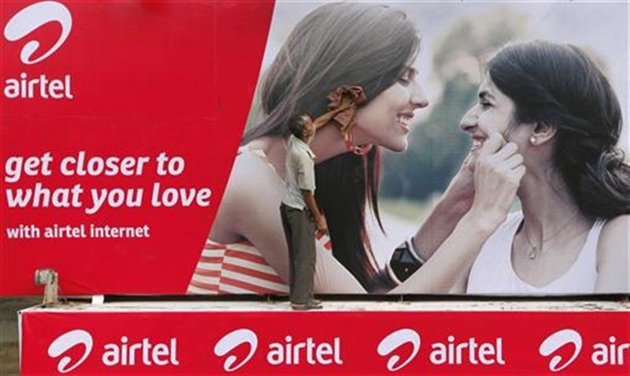
Commonly known as Airtel, the company’s advertising percentage share is 1% according to the report. Airtel is considered to be the largest provider of mobile telephone and second largest provider of fixed telephone in India. It also provides broadband and subscription television services.


Source – Yahoo Finance
Research Report - FICCI-KPMG Indian Media and Entertainment Industry Report 2012

(Note: Data represents shares for January to September 2011)


Thursday, September 23, 2010

What Is Freemium?

(Click to Enlarge)

Freemium is a business model that works by offering basic Web services, or a basic downloadable digital product, for free, while charging a premium for advanced or special features. The word "freemium" is created by combining the two aspects of the business model: "free" and "premium". The business model has gained popularity with Web 2.0companies.

The freemium business model was articulated by venture capitalist Fred Wilson on 23 March 2006.
"Give your service away for free, possibly ad supported but maybe not, acquire a lot of customers very efficiently through word of mouth, referral networks, organic search marketing, etc., then offer premium priced value added services or an enhanced version of your service to your customer base."

An early example of the freemium model working on the internet was Musicmatch Jukebox, an all-in-one music management tool that was first marketed with a freemium model in 1999. Most users could use the Basic/Free version, but a $19.99 upgrade provided extra features such as supertagging and faster ripping and burning. 
According to the New York Times, freemium is becoming the "most popular business model among Web start-ups." Some of the most popular services, such as Pandora, Flickr, LinkedIn, Spotify and Skype use the freemium model.

§  Feature limited
§  Time Limited
§  Capacity limited
§  Seat limited
§  Customer Class Limited

Saturday, August 21, 2010

What Is ATL and BTL?


(Please Click to Enlarge)


Above the line (ATL), below the line (BTL), and through the Line (TTL), are advertising techniques.
In a nutshell, while ATL promotions are tailored for a mass audience, BTL promotions are targeted at individuals according to their needs or preferences. While ATL promotions can establish brand identity, BTL can actually lead to a sale. ATL promotions are also difficult to measure well, while BTL promotions are highly measurable, giving marketer’s valuable insights into their return-on-investment.
Promotional activities carried out through mass media, such as television, radio and newspaper, are classed as "above the line" promotion. "Below the line" promotion refers to forms of non-media communication or advertising, and has become increasingly important in the communications mix of many companies, not only those involved in fast moving consumer goods, but also for industrial goods.
"Through the line" refers to an advertising strategy involving both above and below the line communications in which one form of advertising points the target to another form of advertising thereby crossing the "line".

Above the line sales promotion
ATL is a type of advertising through media such as television, cinema, radio, print, web banners and web search engines to promote brands. This type of communication is conventional in nature and is considered impersonal to customers. It differs from BTL advertising, which uses unconventional brand-building strategies, such as direct mail and printed media (and usually involves no motion graphics). It is much more effective when the target group is very large and difficult to define.

Below the line sales promotion
BTL sales promotion is an immediate or delayed incentive to purchase, expressed in cash or in kind, and having short duration. It is efficient and cost-effective for targeting a limited and specific group. It uses less conventional methods than the usual ATL channels of advertising, typically focusing on direct means of communication, most commonly direct mail and e-mail, often using highly targeted lists of names to maximize response rates. BTL services may include those for which a fee is agreed upon and charged up front.
BTL is a common technique used for "touch and feel" products (consumer items where the customer will rely on immediate information rather than previously researched items). BTL techniques ensure recall of the brand while at the same time highlighting the features of the product.
Another BTL technique involves sales personnel deployed at retail stores near targeted products. This technique may be used to generate trials of newly launched products.


Monday, August 9, 2010

What Is Search Engine Marketing?


Search engine marketing, or SEM, is a form of Internet marketing that seeks to promote websites by increasing their visibility in search engine result pages (SERPs) through the use of search engine optimization, paid placement and paid inclusion.


In 2008, North American advertisers spent US$13.5 billion on search engine marketing. The largest SEM vendors are Google AdWords, Yahoo! Search Marketing and Microsoft adCenter. As of 2006, SEM was growing much faster than traditional advertising and even other channels of online marketing. Because of the complex technology, a secondary "search marketing agency" market has evolved. Many marketers have difficulty understanding the intricacies of search engine marketing and choose to rely on third party agencies to manage their search marketing.


History

As the number of sites on the Web increased in the mid-to-late 90s, search engines started appearing to help people find information quickly. Search engines developed business models to finance their services, such as pay per click programs offered by Open Text in 1996 and then Goto.com in 1998. Goto.com later changed its name to Overture in 2001, and was purchased by Yahoo! in 2003, and now offers paid search opportunities for advertisers through Yahoo! Search Marketing. Google also began to offer advertisements on search results pages in 2000 through the Google AdWords program. By 2007, pay-per-click programs proved to be primary money-makers for search engines. In a market dominated by Google, in 2009 Yahoo! and Microsoft announced the intention to forge an alliance. The Yahoo! & Microsoft Search Alliance eventually received approval from regulators in the US and Europe in February 2010.

Monday, July 26, 2010

What is Blue ocean Strategy?

It is a slang term for the uncontested market space for an unknown industry or innovation. Coined by professors W. Chan Kim and Renee Mauborgne in their book "Blue Ocean Strategy: How to Create Uncontested Market Space and the Make Competition Irrelevant" (2005), blue oceans are associated with high potential profits.

In an established industry, companies compete with each other for every piece of available market share. The competition is often so intense that some firms cannot sustain themselves and stop operating. This type of industry describes a red ocean, representing saturated market share, bloodied by competition. 

To avoid costly competition, firms can innovate or expand in the hope of finding a blue ocean. A blue ocean exists where no firms currently operate, leaving the company to expand without competition.

Red Oceans are all the industries in existence today—the known market space. In the red oceans, industry boundaries are defined and accepted, and the competitive rules of the game are known. Here companies try to outperform their rivals to grab a greater share of product or service demand. As the market space gets crowded, prospects for profits and growth are reduced. Products become commodities or niche, and cutthroat competition turns the ocean bloody. Hence, the term red oceans.
Blue oceans, in contrast, denote all the industries not in existence today—the unknown market space, untainted by competition. In blue oceans, demand is created rather than fought over. There is ample opportunity for growth that is both profitable and rapid. In blue oceans, competition is irrelevant because the rules of the game are waiting to be set. Blue Ocean is an analogy to describe the wider, deeper potential of market space that is not yet explored.
The corner-stone of Blue Ocean Strategy is 'Value Innovation'. A blue ocean is created when a company achieves value innovation that creates value simultaneously for both the buyer and the company. The innovation (in product, service, or delivery) must raise and create value for the market, while simultaneously reducing or eliminating features or services that are less valued by the current or future market. The authors criticize Michael Porter's idea that successful businesses are either low-cost providers or niche-players. Instead, they propose finding value that crosses conventional market segmentation and offering value and lower cost.

Tuesday, July 13, 2010

What Is Washroom Marketing?


It sounds weird but it’s true.

As the name suggests, it’s advertising in the washroom, literally. Something like putting the advertisement and pamphlet about a product in the loo.

This is a place our eyes can never miss, 9 out of 10 times its gender specific, and when you are in the loo, you might as well read it.

Most of us have taken newspapers to the loo, which in fact is filled with ads. There have been questions about the privacy issues in the washroom, but one can’t figure out how privacy comes into picture here. There is no camera there in the washroom, unless and until the advertisement is hiding a cam under it.

Just placing something to read there doesn’t lead to invasion of privacy. Moreover it’s a sure shot method of reaching the customer. He/she will read it without any disturbance. And yes for everyone’s information there are companies too for washroom marketing like Positive Media of UK, IN YOUR FACE media corp. and many others. The marketing communication world is getting weirder by the day…

Sunday, July 11, 2010

What are PODs and POPs? (Marketing)

(Points Of Parity)
(Points Of Difference)

Points-of-difference (PODs) – Attributes or benefits consumers strongly associate with a brand, positively evaluate and believe they could not find to the same extent with a competing brand i.e. points where you are claiming superiority or exclusiveness over other products in the category.

In a crowded market place, products that stand out and get noticed.

"Point of Difference" = a difference that competitors do not have have in their product or Brand.

The assessment of consumer desirability criteria for PODs should be against:

  • Relevance

  • Distinctiveness

  • Believability

Points-of-parity (POPs) – Associations that are not necessarily unique to the brand but may be shared by other brands i.e. where you can at least match the competitors claimed benefits. While POPs may usually not be the reason to choose a brand, their absence can certainly be a reason to drop a brand.

Whilst when assessing the deliverability criteria for POPs look at their:

  • Feasibility

  • Communicability

  • Sustainability